
Can you think of anything in your life that causes Subluxations?
Stress? Falls? Sports Injury? Car accident? Toxins in foods? Polluted environment? Repeated tasks? Divorce? Etc...
Learn about Subluxations
- What do subluxations do to my body?
- How do Subluxations affect me?
- What causes Subluxation?
- How can I tell if I have Subluxation?
- How are subluxations corrected?
Subluxation - an interference in the function of your body...
|
So… What Is The Subluxation anyway?
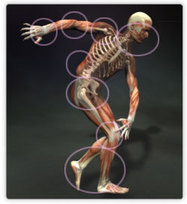
Subluxation is the term used to describe a bone that is not in its normal position and/or has lost its normal motion in relation to neighboring bones within a joint. In the spine, a subluxation is called a Vertebral Subluxation… |
|
What do Subluxations do to my body?
How do subluxations affect me? Your nervous system (brain, spinal cord, spinal nerves) controls and coordinates all of the functions of your body. The nervous system is the way your body communicates with itself. Messages are sent from the brain, down the spinal cord, out the nerve root to your organs and muscles; and vice versa. If the messages and signals traveling over your nerves have any interference, parts of your body will not get the proper nerve messages and will not be able to function at 100% of their innate abilities. In other words, some parts of your body will not be working properly. Dr. Lizie applies Chiropractic to locate interferences (subluxations) and to reduce or correct them. Over a series of chiropractic adjustments specifically designed to correct the vertebral subluxations in your spine, the function of your internal messaging system is restored. Chiropractors are the only professionals who undergo years of training to be the experts at correcting subluxations. |
What causes Subluxations?
Subluxations have a great number of different causes all of which the average individual is exposed to daily. These causes can be described in terms of physical, chemical, and emotional causes.
Physical causes include acute trauma to the body, sports injury, poor sleeping habits, birthing process, repetitive motions affecting the spine, bad postural habits, improper workstation habits and design, and weak or imbalanced spinal musculature.
Chemical causes include poor dietary and nutritional practices, drug and alcohol use and abuse, as well as the ingestion of chemical toxins in the foods we eat, air we breathe, and water we drink. Chemicals are harmful to the body and decrease the body's ability to function optimally and reduce the ability to successfully adapt to and withstand internal and external stresses - making us more susceptible to spinal subluxations and the consequences of these subluxations.
Emotional causes collectively refers to our thoughts, feelings and stress… all three affect the body’s physiology (the natural chemicals (hormones and neuropeptides) our body releases). Negative thought patterns, excessive stress or inadequate stress management skills can deplete the body of the ability to sustain normal functions. The impact of emotional stress on physical health is well documented in medical research and has devastating effects on the immune system, making the body susceptible to injury and disease. What are your thoughts?
Subluxations have a great number of different causes all of which the average individual is exposed to daily. These causes can be described in terms of physical, chemical, and emotional causes.
Physical causes include acute trauma to the body, sports injury, poor sleeping habits, birthing process, repetitive motions affecting the spine, bad postural habits, improper workstation habits and design, and weak or imbalanced spinal musculature.
Chemical causes include poor dietary and nutritional practices, drug and alcohol use and abuse, as well as the ingestion of chemical toxins in the foods we eat, air we breathe, and water we drink. Chemicals are harmful to the body and decrease the body's ability to function optimally and reduce the ability to successfully adapt to and withstand internal and external stresses - making us more susceptible to spinal subluxations and the consequences of these subluxations.
Emotional causes collectively refers to our thoughts, feelings and stress… all three affect the body’s physiology (the natural chemicals (hormones and neuropeptides) our body releases). Negative thought patterns, excessive stress or inadequate stress management skills can deplete the body of the ability to sustain normal functions. The impact of emotional stress on physical health is well documented in medical research and has devastating effects on the immune system, making the body susceptible to injury and disease. What are your thoughts?
How Can I Tell If I Have A Vertebral Subluxation?
The only accurate way to determine if you suffer from subluxations is to receive a chiropractic evaluation. However, a number of signs and symptoms are commonly associated with the vertebral subluxation, including:
Individuals who are not currently experiencing pain or other discomforts are not necessarily "subluxation free." As described, pain is a very poor indicator of disease processes, including the presence of subluxations. Subluxations are similar to cavities in that many times a significant amount of damage is present before symptoms such as pain are felt. This is why we recommend, like your dentist, that individuals seek periodic spinal evaluations to check for the presence of subluxations and other spinal abnormalities, even in the absence of pain.
The only accurate way to determine if you suffer from subluxations is to receive a chiropractic evaluation. However, a number of signs and symptoms are commonly associated with the vertebral subluxation, including:
- neck pain, tenderness, soreness
- back pain, tenderness, soreness
- muscle stiffness
- headaches
- dizziness or balance problems
- muscle spasm or tightness
- muscle weakness
- reduced mobility
- pain, numbness or tingling
- joint pain and stiffness
- low energy
- poor overall state of health
- poor tissue healing, slow healing
- poor organ function
Individuals who are not currently experiencing pain or other discomforts are not necessarily "subluxation free." As described, pain is a very poor indicator of disease processes, including the presence of subluxations. Subluxations are similar to cavities in that many times a significant amount of damage is present before symptoms such as pain are felt. This is why we recommend, like your dentist, that individuals seek periodic spinal evaluations to check for the presence of subluxations and other spinal abnormalities, even in the absence of pain.
How are Subluxations Corrected?
Doctors of chiropractic learn a number of different chiropractic techniques and procedures to correct vertebral subluxations. Most of the procedures involve the application of a chiropractic spinal adjustment to the affected vertebrae. Chiropractic adjustments involve the application of a quick but gentle corrective force into the "subluxated" spinal vertebrae. The adjustment can be delivered manually through the hands or can be applied through the use of a specialized tool. Subluxations generally require multiple treatments or adjustments for complete normalization to occur. Similar to straightening teeth, correcting malfunctioning and mis-aligned vertebrae requires time for the tissues and nervous system to accept this new position as "normal."